Aiding Pulling Horses: A Designer's Field Test
When I first pulled up the preview for Aiding Pulling Horses, my immediate reaction wasn't just about the subject matter, but about the potential narrative it carries. As a designer who spends hours tweaking stitch paths and density maps, I look for designs that tell a story without screaming for attention. This piece, rooted deeply in the Farm category, offers a rustic charm that feels authentic rather than clichéd. It captures the grit and grace of draft horses, a theme that resonates strongly with current trends in heritage styling and rural aesthetics. Before committing this machine embroidery design to a client project or adding it to my shop inventory, I needed to evaluate how it translates from a digital embroidery file to a tangible, stitched reality.
First Impressions and Visual Personality
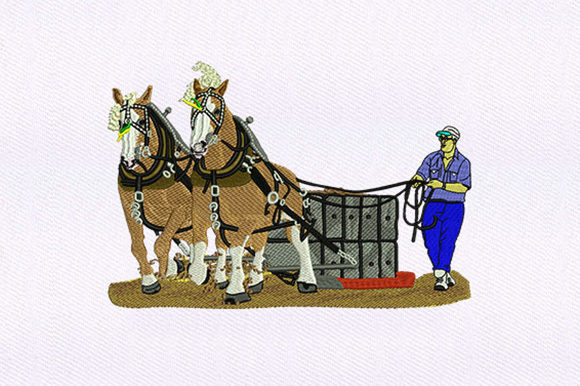
The layout of Aiding Pulling Horses suggests a dynamic composition. In the world of Embroidery, static images often fall flat, but a design depicting motion—like horses pulling a load—requires careful handling of line weight and direction. My initial assessment indicates a balanced mix of satin stitch outlines and fill stitch bodies, which is crucial for defining muscle structure and movement. The visual personality here is sturdy and reliable, making it an excellent candidate for products that need to convey durability and tradition. It doesn't feel like a delicate, fleeting motif; it feels like something meant to last, much like the animals it depicts.
For those of us running a craft business, the "mood" of a design dictates its marketability. This design exudes a sense of hardworking elegance. It would sit comfortably on a high-end boutique product just as well as it would on a casual weekend wear item. The detail level appears sufficient to hold interest upon close inspection, which is vital for maintaining perceived value in a handmade product.
Real-World Application: The Custom Tote Scenario
To truly test the viability of Aiding Pulling Horses, I imagined a specific real-life scenario: creating a limited run of heavy-canvas tote bags for a local farmers' market vendor. These bags needed to be durable, stylish, and instantly recognizable as part of a brand identity focused on organic, locally sourced goods.
In this context, the design shines. Placed centrally on a natural cotton canvas, the earthy tones typically associated with farm life would pop beautifully. However, the success of this embroidery project hinges on the stitch density. If the fill areas are too dense, the canvas might pucker, ruining the clean lines of the horses. If they are too sparse, the backing fabric might show through, cheapening the look. Assuming the digitizer has accounted for the texture of canvas, this design could elevate a simple tote into a premium small shop product. Customers interacting with the finished bag would feel the texture of the stitches, reinforcing the quality of the brand.
Beyond totes, I can see this working exceptionally well as sweatshirt embroidery for a family reunion or a 4-H club gathering. On a fleece or French terry fabric, the design needs to breathe. The curves of the horses' legs and the tension in the reins must remain smooth even when the fabric stretches. If the underlay is correctly programmed in the DST or PES files, the result is a professional-grade custom apparel piece that customers will wear proudly.
Navigating Technical Challenges
While the aesthetic appeal is strong, a responsible reviewer must address the technical pitfalls. Aiding Pulling Horses likely contains intricate details, particularly around the hooves, harnesses, and facial features. These are the danger zones in any digital embroidery file.
- Fabric Selection: Avoid using this on highly textured fabrics like thick bouclé or loose-weave linens unless you use a heavy water-soluble topper. The fine details of the harness could get lost in the fabric's noise.
- Small Hoop Constraints: If you are attempting to resize this for a cap or a small pocket, be wary. Compressing a detailed scene into a 4x4 hoop size can turn distinct stitches into a muddy blob. Always check the minimum recommended size before purchasing.
- Dark Fabrics: Stitching on black or navy requires a solid underlay strategy. Without it, the dark fabric can peek through the lighter thread colors of the horses, creating a shadow effect that diminishes clarity.
- Curved Surfaces: Applying this to a structured cap is risky due to the horizontal expanse of the design. The curvature of the front panel might distort the perspective of the horses, making them look like they are sliding off the edge.
Furthermore, consider the end-user's lifestyle. If this design is intended for a baby embroidery project, such as a nursery wall hanging, durability is less of an issue than softness. However, if it's going onto a work apron or a dog collar, the running stitch elements and satin borders must be locked down tight to withstand frequent washing and abrasion.
Enhancing Brand Value and Customer Trust
Using a cohesive theme like Aiding Pulling Horses across a product line helps build brand consistency. For an Etsy seller specializing in rural decor, this design acts as a signature asset. When a customer sees the same high-quality motif on a pillow cover, a tea towel, and a patch, it establishes trust. They recognize the attention to detail and the thematic commitment.
The "giftability" factor is also high. Farm-themed items are perennial favorites for housewarmings, wedding gifts for couples starting a homestead, or holiday gifts for animal lovers. A well-executed version of this design transforms a generic item into a thoughtful personalized gift. The emotional connection people have with horses adds a layer of warmth to the finished product that generic geometric patterns simply cannot achieve.
Practical Notes for the Professional Maker
Before you dive into production, here is my checklist for integrating Aiding Pulling Horses into your workflow:
- Test on Scraps: Never skip the stitch-out test. Use the exact fabric and stabilizer combination you plan to use for the final sale. Check for puckering and registration issues.
- Thread Contrast: Experiment with thread colors. While traditional browns and tans work, consider a monochromatic scheme using varying shades of grey or blue for a modern twist on a classic Farm theme.
- Stabilizer Strategy: Match your stabilizer to the fabric weight. Cut-away is usually best for garments that will be washed often, while tear-away might suffice for decorative home goods.
- File Format Verification: Ensure your machine accepts the provided formats. The list includes 10O, ART, CND, DSB, DST, DSZ, EXP, HUS, JEF, PCS, PEC, PES, TAP, VIP, VP3, and XXX. Confirm compatibility to avoid conversion errors that can corrupt stitch data.
- Licensing Check: Always verify the license terms. Can you sell the physical handmade product? Can you sell the design assets themselves? Clarifying this protects your craft business from legal issues.
- Mockup Testing: Create printable mockups in both color and black-and-white to see how the design holds up without the distraction of thread sheen. This helps in marketing materials where color accuracy varies.
In conclusion, Aiding Pulling Horses is more than just a pattern; it is a versatile tool for the creative entrepreneur. When handled with technical precision and placed on the right materials, it has the power to elevate a simple embroidered patch or tote bag design into a cherished keepsake. It bridges the gap between rustic utility and artistic expression, making it a worthy addition to any serious designer's library.